White House Hot Spot and Montana Mermaids

From DC to the nation’s heartland, officials are weighing economic and public health concerns against one another.

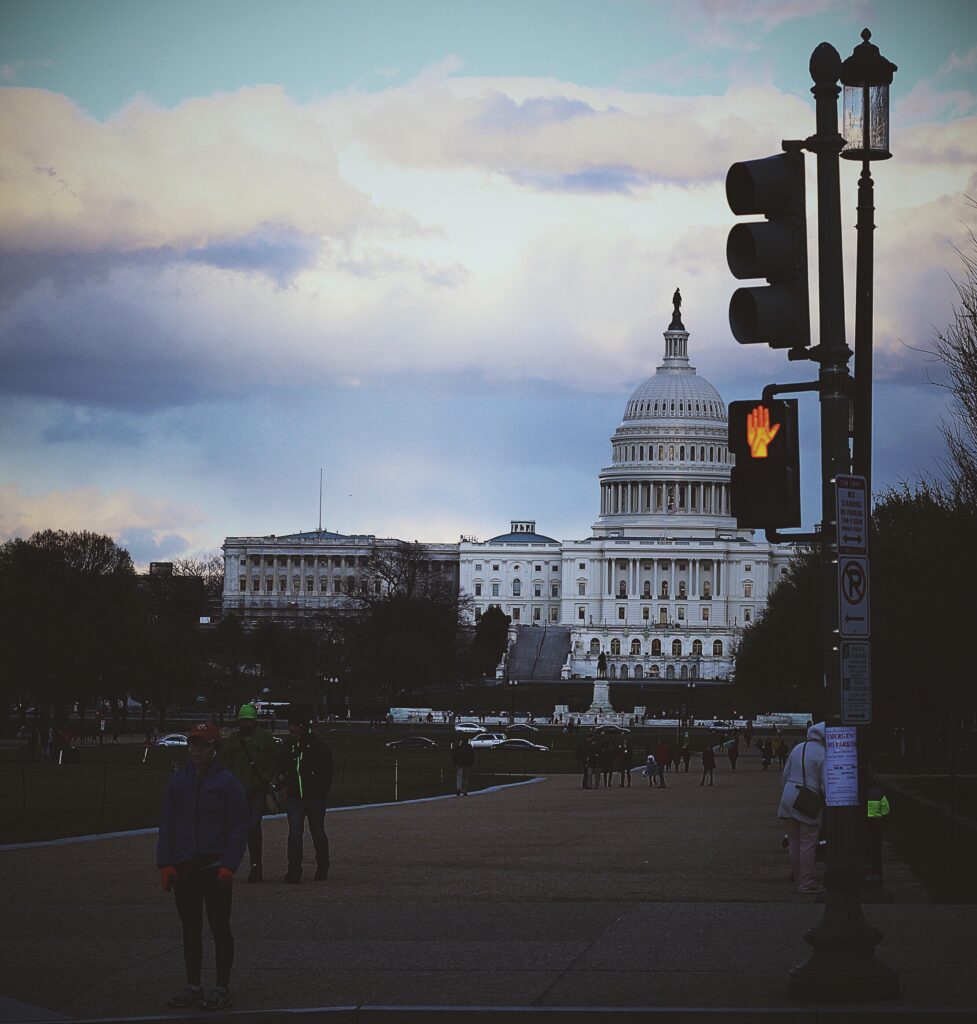
As states ponder the financial benefits and the public health risks of reopening workplaces, the White House itself has become something of a COVID-19 hot spot.

In addition to the President’s valet and the Vice President’s press secretary testing positive for COVID-19 last week, a number of administration officials have self-quarantined, including:

  • Anthony Fauci, Director of the National Institute of Allergy and Infectious Diseases;
  • Food and Drug Administration (FDA) Commissioner Stephen Hahn;
  • Centers for Disease Control and Prevention (CDC) Director Robert Redfield;
  • On the Pentagon side: Chief of Naval Operations Michael Gilday and Chief of the National Guard Bureau Joseph Lengyel; and
  • S. Sen. Lamar Alexander, after one of his staff members tested positive.

Vice President Mike Pence, who, of course, was in contact with his press secretary that tested positive, reportedly stayed away from the White House this past weekend, but is not self-quarantining himself, and will show up for work this week. However, he is “laying low,” according to one source.

On the legislative side, “bit” and “Rooseveltian” are the words Democrats have been using when talking about the next stimulus package – priced at $3 trillion – which they introduced on Tuesday and are expected to vote on Friday. The package is to provide Americans with vast and wide-ranging economic relief from the coronavirus pandemic.

  • House Democrats intend to include funds for states and local government, as well as more direct payments to Americans and rental and homeowner assistance to stop evictions and foreclosures.
  • The Republican-led Senate, however, is pushing back and taking a “wait-and-see” attitude: wait and see how the stimulus we have passed works, they’re saying, and then do more, if necessary. President Trump seemed to take the Senate’s side this week, when he said that the White House is “in no rush” to pass additional stimulus.
  • Another obstacle is that the House has not decided on when to return to Washington. There are a number of political issues impacting this decision, but there are also health risks: 22 construction workers in the Canon Office Building in D.C. have tested positive for COVID-19. Now, the Canon Office Building is not only where many of the representatives have their offices, it’s also where some lawmakers sleep, in order to save on hotel or rental costs. It’s tough to social distance when you treat your office like a college dorm.

Finally, there was a story from a Montana tiki bar last week that reflects a trend at the national level, with regard to confusing government reopening guidelines. The bar owners were given contradictory instructions from the governor’s office and the county health department when they asked: could mermaids swim in the aquarium that patrons watch from their bar stools, or are schools of swimming mermaids going against social distancing? The governor said yes, health department said no.

Meanwhile, at the national level, the CDC released a draft of guidelines for reopening different types of workplaces on Tuesday of last week. On Thursday, the White House pulled that guidance back and said that it was too strict – and, maybe a little late in the game – so it would never see the light of day. Similarly, the U.S. Equal Employment Opportunity Commission put out guidance on Wednesday for employers returning to the workplace, and pulled back on it by Thursday.

The state and local government finally agreed that the mermaids of Montana do get to swim – though they have to do it one at a time – but we are still waiting for consistent guidelines from the federal government on how they want to see workplaces reopen in the context of this pandemic.

Programming Note: Matthew Albright is a permanent panelist on Monitor Mondays. Listen to his live reporting every Monday, 10-10:30 a.m. EST

Facebook
Twitter
LinkedIn

Matthew Albright

Matthew Albright is the chief legislative affairs officer at Zelis Healthcare. Previously, Albright was senior manager at CAQH CORE, and earlier, he was the acting deputy director of the Office of E-Health and Services for the Centers for Medicare & Medicaid Services.

Related Stories

Leave a Reply

Please log in to your account to comment on this article.

Featured Webcasts

2026 ICD-10-CM/PCS Coding Clinic Update Webcast Series

Uncover essential coding insights with nationally recognized coding authority Kay Piper, RHIA, CDIP, CCS. Through ICD10monitor’s interactive, on‑demand webcast series, Kay walks you through the AHA’s 2026 ICD‑10‑CM/PCS Quarterly Coding Clinics, translating each update into practical, easy‑to‑apply guidance designed to sharpen precision, ensure compliance, and strengthen day‑to‑day decision‑making. Available shortly after each official release.

April 13, 2026

2026 ICD-10-CM/PCS Coding Clinic Update: Fourth Quarter

Uncover critical guidance on the ICD-10-CM/PCS code updates. Kay Piper reviews and explains ICD-10-CM/PCS coding guidelines in the AHA’s fourth quarter 2026 ICD-10-CM/PCS Coding Clinic in an easy to access on-demand webcast.

December 14, 2026

2026 ICD-10-CM/PCS Coding Clinic Update: Third Quarter

Uncover critical guidance on the ICD-10-CM/PCS code updates. Kay Piper reviews and explains ICD-10-CM/PCS coding guidelines in the AHA’s third quarter 2026 ICD-10-CM/PCS Coding Clinic in an easy to access on-demand webcast.

October 12, 2026

2026 ICD-10-CM/PCS Coding Clinic Update: Second Quarter

Uncover critical guidance on the ICD-10-CM/PCS code updates. Kay Piper reviews and explains ICD-10-CM/PCS coding guidelines in the AHA’s second quarter 2026 ICD-10-CM/PCS Coding Clinic in an easy to access on-demand webcast.

July 13, 2026

Trending News

Featured Webcasts

Compliance for the Inpatient Psychiatric Facility (IPF-PPS): Minimizing Federal Audit Findings by Strengthening Best Practices

Federal auditors are intensifying their focus on inpatient psychiatric facilities, using advanced data analytics to spotlight outliers and pursue high‑dollar repayments. In this high‑impact webcast, Michael Calahan, PA, MBA, Compliance Officer and V.P., Hospital & Physician Compliance, breaks down what regulators are really targeting in IPF-PPS admissions, documentation, treatment and discharge planning. Attendees will learn practical steps to tighten processes, avoid common audit triggers and protect reimbursement and reduce the risk of multimillion-dollar repayment demands.

April 9, 2026

Mastering MDM for Accurate Professional Fee Coding

In this timely session, Stacey Shillito, CDIP, CPMA, CCS, CCS-P, CPEDC, COPC, breaks down the complexities of Medical Decision Making (MDM) documentation so providers can confidently capture the true complexity of their care. Attendees will learn practical, efficient strategies to ensure documentation aligns with current E/M guidelines, supports accurate coding, and reduces audit risk, all without adding to charting time.


March 31, 2026

The PEPPER Returns – Risk and Opportunity at Your Fingertips

Join Ronald Hirsch, MD, FACP, CHCQM for The PEPPER Returns – Risk and Opportunity at Your Fingertips, a practical webcast that demystifies the PEPPER and shows you how to turn complex claims data into actionable insights. Dr. Hirsch will explain how to interpret key measures, identify compliance risks, uncover missed revenue opportunities, and understand new updates in the PEPPER, all to help your organization stay ahead of audits and use this powerful data proactively.

March 19, 2026

Top 10 Audit Targets for 2026-2027 for Hospitals & Physicians: Protect Your Revenue

Stay ahead of the 2026-2027 audit surge with “Top 10 Audit Targets for 2026-2027 for Hospitals & Physicians: Protect Your Revenue,” a high-impact webcast led by Michael Calahan, PA, MBA. This concise session gives hospitals and physicians clear insight into the most likely federal audit targets, such as E/M services, split/shared and critical care, observation and admissions, device credits, and Two-Midnight Rule changes, and shows how to tighten documentation, coding, and internal processes to reduce denials, recoupments, and penalties. Attendees walk away with practical best practices to protect revenue, strengthen compliance, and better prepare their teams for inevitable audits.


January 29, 2026

Trending News

Happy National Doctor’s Day! Learn how to get a complimentary webcast on ‘Decoding Social Admissions’ as a token of our heartfelt appreciation! Click here to learn more →

CYBER WEEK IS HERE! Don’t miss your chance to get 20% off now until Dec. 1 with code CYBER25

CYBER WEEK IS HERE! Don’t miss your chance to get 20% off now until Dec. 2 with code CYBER24