
AI in Healthcare Documentation: Who’s Training Whom?

AI in Healthcare Documentation: Who’s Training Whom?
EDITOR’S NOTE: AI-assisted editing tools were used only for proofreading and language refinement; all analysis, interpretation, and conclusions reflect the author’s original work.

Artificial intelligence (AI) has swept into clinical documentation faster than most of us expected. It can summarize a visit, flag a diagnosis, even suggest how a note should read. But for all that promise, the system still relies on us to keep it honest.

Efficiency – shorter notes, predictive dashboards, auto-coding – only matters when people stay in charge. Without that steady human check, algorithms can twist nuance, miss intent, or quietly rewrite a patient’s story. The real issue is no longer what AI can do for healthcare; it’s how we keep human judgment in command of the record.

Federal agencies have begun saying the same thing aloud. In early 2024, the Office of the National Coordinator for Health Information Technology (ONC) issued a rule requiring developers to disclose exactly how their “predictive decision-support interventions” operate within certified electronic health record systems. The agency acknowledged that any tool capable of drafting or suggesting documentation is already influencing clinical care. Around the same time, the U.S. Department of Health and Human Services (HHS) Office of Inspector General (OIG) updated its General Compliance Program Guidance, warning that automation without human supervision can spread errors faster than people can correct them. Both agencies reached the same conclusion: once an algorithm touches the chart, responsibility for what appears there still rests with the human signer.

By the fall of 2025, the question had reached Washington, D.C. The American Hospital Association (AHA) wrote to the White House Office of Science and Technology Policy, urging leaders to keep clinicians “in the decision loop” for every algorithm that affects care or coverage. Speaking for nearly 5,000 hospitals, the AHA argued that insurer-driven AI has already “exacerbated inappropriate denials,” piling new administrative work onto care teams.

It asked that a qualified clinician review every denial generated by a machine before it counts. The takeaway was plain: speed is no substitute for judgment. Whether it’s documentation or payment, AI can lend a hand, but it cannot act alone.

At the bedside, this debate feels personal. Physicians and nurses now type into records that anticipate their next word. Auto-filled differentials, templated assessments, and predictive phrases appear before the patient leaves the room. What was sold as timesaving often creates a second job: editing what the computer thought they meant.

Every suggested diagnosis or “smart” summary still needs a moment of clinical reasoning. If a note misrepresents the encounter, liability doesn’t disappear into the algorithm; it lands on the provider who signed it. Regulators have already confirmed that AI-generated entries carry the same legal weight as human ones. A hallucinated diagnosis, once accepted, can ripple through billing, quality metrics, and audits. In effect, clinicians now supervise both patients and programs.

Clinical documentation integrity (CDI) and coding specialists feel a different version of the same pressure. Their tools highlight “possible sepsis,” auto-populate secondary conditions, or surface “documentation opportunities.”

Helpful? Often. Infallible? Never. The Office of Inspector General (OIG) cautioned that unexamined automation can “amplify inaccuracies in the health record.” The Office of the National Coordinator for Health Information Technology (ONC) coined a term for the slow creep of these edits – automation drift – when machine-written phrases pile up until the record no longer matches reality. After years spent fighting documentation creep, CDI teams are facing its digital cousin, moving at algorithmic speed.

Human checkpoints are the only real counterbalance. CDI and coding professionals verify that every AI-influenced statement still fits the patient’s story. A query that once clarified borderline diagnoses now also serves to test the machine’s suggestion.

When a CDI reviewer pushes back on a diagnosis that lacks indicators, they’re not nitpicking; they’re protecting compliance, accuracy, and the provider’s intent.

Revenue integrity depends on the same vigilance. One AI-prompted code can shift a case-mix index (CMI), an APR-DRG, or a Hierarchical Condition Category (HCC). If that entry isn’t supported, the claim becomes an easy target for denial.

The AHA 2025 warning captured this perfectly: payer algorithms are now auditing provider algorithms, and humans must reconcile the difference. It’s a loop no software can close on its own.

Breaking that loop requires three things: governance, transparency, and education. Governance means including AI oversight in every phase of the revenue cycle, not just IT. Transparency means labeling what the computer wrote and what the clinician wrote, so accountability stays visible. And education means teaching everyone involved – clinicians, CDI staff, coders – how these systems make their predictions and where they can go wrong. A patient’s chart should always read as the clinician’s voice, not the algorithm’s echo.

Keeping humans firmly in the loop finishes the job. Every AI-suggested diagnosis, query, or denial must be reviewed by a human before it becomes part of the legal or financial record. CDI specialists, coders, and clinicians share that duty; it’s where integrity meets compliance.

As automation deepens its reach, the line between help and authorship blurs. AI can find patterns, fill in blanks, and speed up routine work, but it can’t take on responsibility.

That remains with the people who review, interpret, and sign the note. For providers, it means documenting care, not code. For CDI and coding teams, it means defending accuracy against automation drift.

And for hospitals, it means weaving AI governance into every layer of compliance, quality, and education. Artificial intelligence may learn from us, but the standard of integrity must always remain human.

Facebook
Twitter
LinkedIn

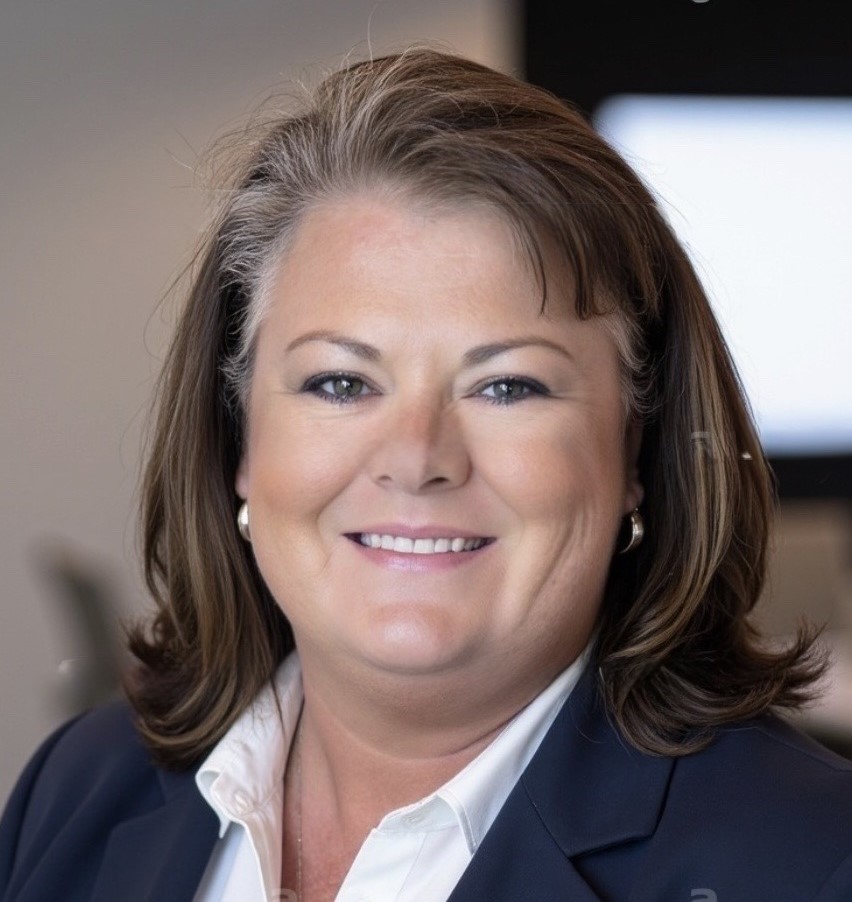
Penny Jefferson, MSN, RN, CCDS, CCDS-O, CCS, CDIP, CRC, CHDA, CRCR, CPHQ, ACPA-C

With more than 33 years in healthcare, Penny began her career as a U.S. Army medic and has held roles spanning CNA through MSN. She brings 14 years of critical care nursing experience and 14 years in Clinical Documentation Integrity. She joined Mayo Clinic in 2019 as a concurrent CDI reviewer and advanced to Supervisor of CDI in Rochester, Minnesota. In December 2022, she transitioned to the University of California Davis Medical Center, where she serves as the Director of CDI. She is a published author, national thought leader, and currently leads the ACPA CommUnity Denials & Appeals Interest Group, fostering collaboration on denial prevention, appeals strategy, and payer engagement. She is also the newly appointed co-host of Talk Ten Tuesday.

Related Stories

Doctors Day Article Image

Doctors Day Reflections

As Doctors Day approaches, we took a moment to ask physicians, advisors, and documentation professionals a simple question: what does this work really feel like

Read More

The OIG, ABN, IMM, and DND in the News

Let’s start with a recent (U.S. Department of Health and Human Services Office of Inspector General) OIG audit of a Medicare Advantage plan. Now these

Read More

Leave a Reply

Please log in to your account to comment on this article.

Featured Webcasts

Mastering OB GYN Coding Accuracy: Precision Coding for Compliance and Reimbursement

Gain clarity and confidence in OB‑GYN coding with this expert‑led webcast featuring Stacey Shillito, CDIP, CPMA, CCS, CCS‑P, CPEDC, COPC. You’ll learn how to apply global maternity package rules accurately, select the right CPT codes for procedures and visits, and identify documentation gaps that lead to denials. With practical guidance and real examples, this session helps you strengthen compliance, reduce audit risk, and ensure accurate reimbursement for women’s health services.

May 14, 2026

2026 ICD-10-CM/PCS Coding Clinic Update Webcast Series

Uncover essential coding insights with nationally recognized coding authority Kay Piper, RHIA, CDIP, CCS. Through ICD10monitor’s interactive, on‑demand webcast series, Kay walks you through the AHA’s 2026 ICD‑10‑CM/PCS Quarterly Coding Clinics, translating each update into practical, easy‑to‑apply guidance designed to sharpen precision, ensure compliance, and strengthen day‑to‑day decision‑making. Available shortly after each official release.

April 13, 2026

2026 ICD-10-CM/PCS Coding Clinic Update: Fourth Quarter

Uncover critical guidance on the ICD-10-CM/PCS code updates. Kay Piper reviews and explains ICD-10-CM/PCS coding guidelines in the AHA’s fourth quarter 2026 ICD-10-CM/PCS Coding Clinic in an easy to access on-demand webcast.

December 14, 2026

2026 ICD-10-CM/PCS Coding Clinic Update: Third Quarter

Uncover critical guidance on the ICD-10-CM/PCS code updates. Kay Piper reviews and explains ICD-10-CM/PCS coding guidelines in the AHA’s third quarter 2026 ICD-10-CM/PCS Coding Clinic in an easy to access on-demand webcast.

October 12, 2026

Trending News

Featured Webcasts

Compliance for the Inpatient Psychiatric Facility (IPF-PPS): Minimizing Federal Audit Findings by Strengthening Best Practices

Federal auditors are intensifying their focus on inpatient psychiatric facilities, using advanced data analytics to spotlight outliers and pursue high‑dollar repayments. In this high‑impact webcast, Michael Calahan, PA, MBA, Compliance Officer and V.P., Hospital & Physician Compliance, breaks down what regulators are really targeting in IPF-PPS admissions, documentation, treatment and discharge planning. Attendees will learn practical steps to tighten processes, avoid common audit triggers and protect reimbursement and reduce the risk of multimillion-dollar repayment demands.

April 9, 2026

Mastering MDM for Accurate Professional Fee Coding

In this timely session, Stacey Shillito, CDIP, CPMA, CCS, CCS-P, CPEDC, COPC, breaks down the complexities of Medical Decision Making (MDM) documentation so providers can confidently capture the true complexity of their care. Attendees will learn practical, efficient strategies to ensure documentation aligns with current E/M guidelines, supports accurate coding, and reduces audit risk, all without adding to charting time.

March 31, 2026

The PEPPER Returns – Risk and Opportunity at Your Fingertips

Join Ronald Hirsch, MD, FACP, CHCQM for The PEPPER Returns – Risk and Opportunity at Your Fingertips, a practical webcast that demystifies the PEPPER and shows you how to turn complex claims data into actionable insights. Dr. Hirsch will explain how to interpret key measures, identify compliance risks, uncover missed revenue opportunities, and understand new updates in the PEPPER, all to help your organization stay ahead of audits and use this powerful data proactively.

March 19, 2026

Top 10 Audit Targets for 2026-2027 for Hospitals & Physicians: Protect Your Revenue

Stay ahead of the 2026-2027 audit surge with “Top 10 Audit Targets for 2026-2027 for Hospitals & Physicians: Protect Your Revenue,” a high-impact webcast led by Michael Calahan, PA, MBA. This concise session gives hospitals and physicians clear insight into the most likely federal audit targets, such as E/M services, split/shared and critical care, observation and admissions, device credits, and Two-Midnight Rule changes, and shows how to tighten documentation, coding, and internal processes to reduce denials, recoupments, and penalties. Attendees walk away with practical best practices to protect revenue, strengthen compliance, and better prepare their teams for inevitable audits.

January 29, 2026

Trending News

Prepare for the 2025 CMS IPPS Final Rule with ICD10monitor’s IPPSPalooza! Click HERE to learn more

Get 15% OFF on all educational webcasts at ICD10monitor with code JULYFOURTH24 until July 4, 2024—start learning today!

BLOOM INTO SAVINGS! Get 25% OFF during our spring sale through March 27. Use code SPRING26 at checkout to claim this offer.

CYBER WEEK IS HERE! Don’t miss your chance to get 20% off now until Dec. 1 with code CYBER25

CYBER WEEK IS HERE! Don’t miss your chance to get 20% off now until Dec. 2 with code CYBER24